
What is this, why does it matter, and who is this for?
We’ve all been there. A good friend calls you to vent. Maybe they’re stuck frustrated with a relationship, stuck in a dead-end job, or just feeling lost.
Now, it’s important to read the room. Sometimes, people just need you to listen, be there for them, and say, “That sucks, I’m so sorry.” In those moments, offering a solution is actually the wrong move. They need empathy, not a project manager.
But other times, they are truly stuck. They are circling the same drain they were circling two months ago. That is when you need a framework to help them break the loop.
This post is about the GROW Model, the most common framework used by coaches in the business environment. While it’s often used by leaders to structure coaching, it applies just as well to friends, partners, and family members. It’s for anyone who wants to transition from “venting buddy” to “helpful guide.”
The Roadmap
- First, I’ll share a story about how I failed to help a friend by being too “helpful” and how I could’ve asked permission to shift gears.
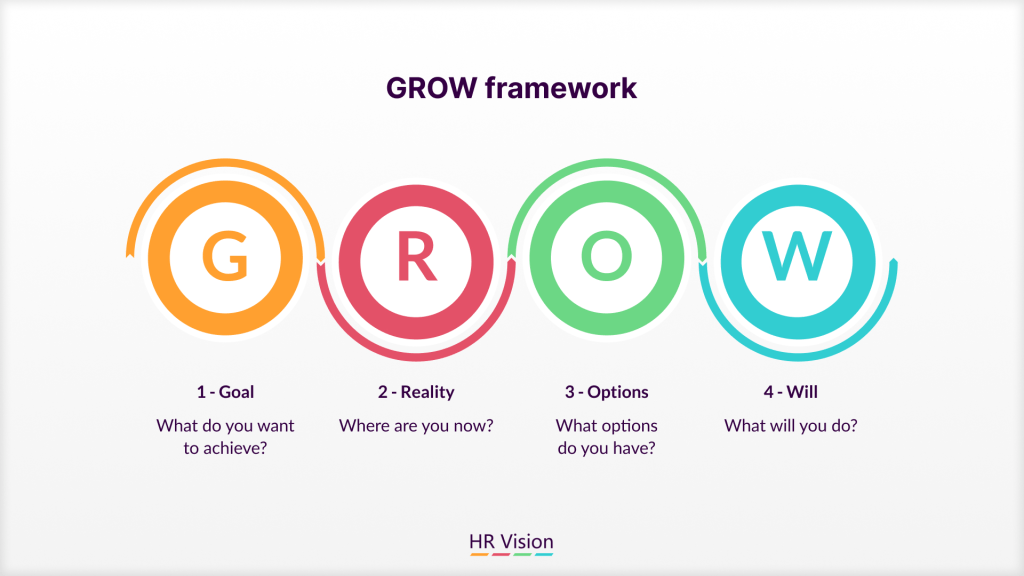
- Then, I’ll break down the four pillars of the GROW model: Goal, Reality, Options, and Will.
- Finally, I’ll share some questions you can use the next time someone comes to you for advice.
The Deep Dive: How to GROW
A Story: The “Stuck” Friend
Let’s talk about “Alex” (not their real name). Alex was a close friend who was miserable in their city. Every time we grabbed coffee, the conversation was the same: “I hate the weather here, it’s too expensive, I’m lonely.”
In the past, I would have pulled up Zillow on my phone and said, “Look at these apartments in Z City! You should move!” I was trying to be supportive, but I was actually just projecting my own solutions onto their life.
This time, I paused. I realized he was just venting. So I asked a clarifying question to see if they wanted to shift modes:
“Do you want to just vent, or do you want to brainstorm some solutions together?”
Alex sighed and said, “Sure. I think I need a solution. I can’t keep doing this.”
That was my green light. I tried using the GROW model to help us step through what was going through their mind.
1. Goal: The Destination
Coaching starts with establishing a goal. I can’t help someone pack if they don’t know where they are going. This step is about deciding exactly what they want to achieve.
Alex knew what they didn’t want (to live here), but not what they did want. I had to flip the script.
Try asking:
“If you could wave a magic wand, what would the ideal situation look like?”
“What do you actually want to get out of this?”
“Why is this specific change so important to you right now?”
Alex realized the goal wasn’t just “moving,” it was “living somewhere with a walkable community and lower rent.” That was a tangible destination.
2. Reality: The Current Situation
Once the goal was clear, we had to look at the map. This step is about gaining awareness of the current reality – the scope and context of the situation. This stage was about honesty and accuracy, involving facts, not judgements.
Try asking:
“Okay, so what is actually happening right now?”
“What have you tried so far?”
“Be honest – what’s the main thing holding you back?”
Alex admitted that while they complained a lot, they hadn’t actually looked at their budget or thought about what was within reach for them. That was the reality check.
3. Options: The Alternatives
Once we understood the gap between the dream and the reality, the conversation turned to defining potential alternatives.
Now this was the fun part. As a friend, I might’ve wanted to give them some potential answers, but it’s better that I didn’t. It wasn’t about giving them a specific answer, but inspiring them to explore all the different options.
Try asking:
“What are your options here – even the wildest ones?”
“Is there anyone else who could help you with this?”
“If you had to do something completely different, what would it be?”
Alex realized they had options: They could ask for more location flexibility at work, they could take some extended time off, or they could just visit a new city for a week to test it out.
4. Will: The Way Forward
Finally, we had to land the plane. In this last step, I gently nudged for Alex’s commitment on a clear plan of action. A vent session without a next step is just complaining.
Try asking:
“Which of those options feels doable right now?”
“Do you need any help getting started?”
“On a scale of 1 to 10, how likely are you to actually do this?”
For the last question, Alex said “8” and decided to book a flight to visit a friend in a walkable city that month. No massive life overhaul, just one step.

In Summary
If there’s one key takeaway from all of this for me, it’s to spend more time asking questions than making statements.
- Goal (what do you want?)
- Reality (where are you now?)
- Options (what could you do?)
- Will (what will you do?)
Real talk: Life conversations hardly ever follow a nice, neat, sequential four-step path. Sometimes it gets messy and emotional. But having this arsenal of questions gives you some direction on how to guide the conversation when your friend is ready for it.
So, the next time your friend is spiraling, first ask if they want advice. If they do, don’t just throw solutions at them. Ask them where they want to go, and help them find their own way there.
 Kim H. Nguyen